NAILSEA
PEOPLE


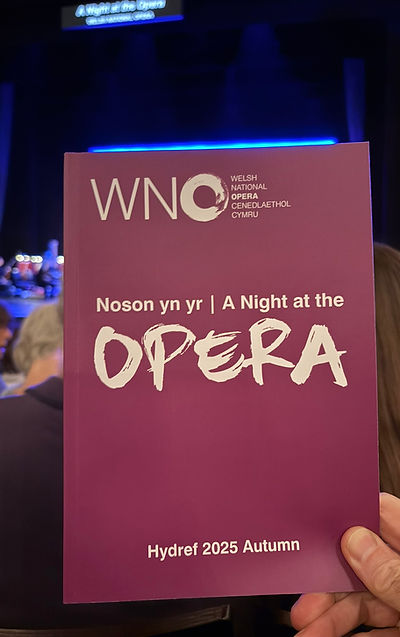
It was up close and personal at the Bristol Hippodrome on Thursday, October 16, when the Welsh National Opera gave us a glimpse of their brilliance.
A live orchestra and chorus made nearly 100 people on stage for A Night At The Opera which went from lively with Bizet’s Carmen to so sad with Puccini’s Madam Butterfly.
We were transported to pre-revolutionary Russia, colonial times in Japan, the land of the Romany in Spain and Cornish cliffs!
It was exciting and moving all at the same time.
Stellar vocal performances from the soloists like Alun Rhys Jenkins who performed both sections of Eisenstein while James Schouten performed Cascada. Giselle Allen (I think) was Butterfly.
The heartbreakingly beautiful Un bel di (One Fine Day) from Madam Butterfly, and the spellbinding Witches’ Chorus from Macbeth were my high points.
Oh and Puccini’s Nessum Dorma which made you feel like you were at the Last Night of the Proms.
In the past decade from Puccini’s Tosca to Mozart’s Don Giovanni, from Tchaikovsky’s Eugene Onegin to Verdi's Les vêpres siciliennes and everything in between we have been treated to almost the complete repertoire of the WNO.
A former partner of my brother introduced him to opera.
When asked if he enjoyed it, he said: “The music is wonderful if only they didn’t sing.”
So not a lot of appreciation going on there.
When I retired from my job as editor of the Clevedon Mercury I decided it was time to try all things new.
Opera and ballet were on the bucket list and theatre critic Gerry Parker who is the font of all knowledge when it comes to performance art was my guide.
And it was Gerry who decided my starting point would be Madam Butterfly.
I absentmindedly asked on our way to the Bristol Hippodrome would it be sung in English?
Gerry said: “An Italian opera based on a French book I don’t think so.”
Luckily in opera you get surtitles which run across the top of the stage. Bit like subtitles on the television which run usually along the bottom of the screen.
They are all over-the-top stories usually full of blood, gore and tragic lost love sometime with a bit of torture and comedic moments (not together).
Unlike other ‘stories’ they don’t tend to all end happily ever after – quite the opposite.
My favourite by far has been William Tell which was advertised at four hours long and as we all know the story I wasn’t sure this was going to be an enjoyable outing
It was fabulous WNO at its best, wonderful sounds and contemporary dance.
The image of a mountain of squirming bodies piled high was a deadly delight.
I cried all the way through Madam Butterfly with a tearful audience joining me after the interval to sob loudly.
However, the laughable giant lobster in Mozart's opera, The Magic Flute and the stormtroopers in a modern version of Macbeth didn’t appeal.
Thursday night offered a great programme of cultural gems and crowd pleasers with characterisations spot on. This was aided by severe lighting adding gravitas to more dramatic renditions.
The in-sync colour coordinated dark costumes with sparkly trimmings or accessories worked and there were no props aside from champagne flutes and the fluttering of small red handkerchiefs for a farewell song.
Sadly, it was an ageing if appreciative but not sellout audience.
For me my limited love of classical music comes from school assemblies and a stern music teacher who made us fold our arms on our desks and rest our heads for a 45 minute ‘lesson’ learning to love the traditional highbrow pieces she played on her gramophone!
In my humble opinion A Night At The Opera is a great introduction to the genre and should be put on the education curriculum.
Carol Ann Deacon